Slow Emotion

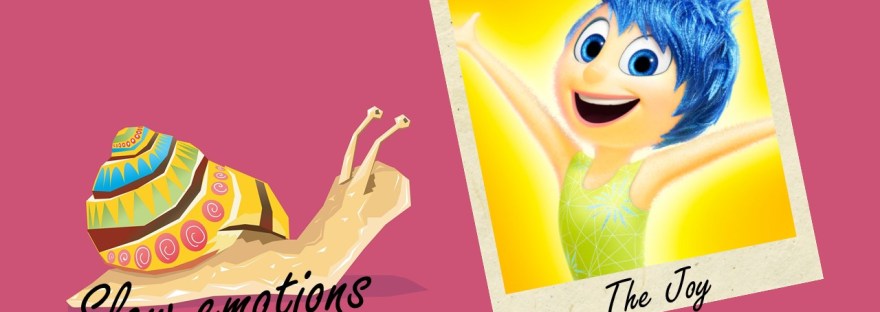
The Joy

Psychological research and literary attention to joy are not very extensive. In psychology, there is, in general, more research on negative emotions than on so-called positive emotions. Even among the latter, joy has not received much attention from researchers, who have focused more on the feeling of happiness.

Joy is that momentary emotion that is felt when, all of a sudden, we realize that all things are in their place. Joy is associated with surprise. We feel joy when an unexpected and pleasant event presents itself before us. Joy is found in small gestures, in a ray of sunshine on a gloomy day, or, quoting the philosopher Spinoza, “Joy is a joy accompanied by the idea of ​​a past thing, which happened unexpectedly.”

From this point of view, joy is an emotion that happens. Due to this nature so linked to luck, attention has always been paid to happiness, which on the contrary is a feeling that we can more easily manipulate and build our happiness.

Yet, it is estimated that joy is the most felt emotion during the day.

In our evolution, joy has played an important role in signalling the approach to our goal and prepares our body to spend much more energy to reach the goal. This was an important function, in order to invest in social resources and increase the sense of community.

Contrary to sadness, which helps develop a critical attitude, joy prepares us to consider the opportunities we face.

We are used to associating joy with positive stimuli, which are morally acceptable or useful to the community to which we belong. Like all emotions, joy manifests itself as a result of an unconscious evaluation of the situation we are experiencing. It is not therefore certain that it is a positive or morally desirable event that triggers this feeling. Without disturbing extreme examples, such as the joy felt by the Nazi guards in annihilating the enemy, many of us will certainly have felt an emotion of Schadenfreude, or that subtle joy we feel in witnessing the misfortunes of others.

Doesn’t it seem that literature offers us many other ideas about joy, that it is better to try it than to study it?

Here are some reflection questions for you. Have you ever wondered about the things that bring you joy? Would you have ever said that it is the most felt emotion? Have you ever heard of Schadenfreude? Have you ever felt this way?

Bibliografia

Smith, T. W. (2017). Atlante delle emozioni umane: 156 emozioni che hai provato, che non sai di aver provato, che non proverai mai. Utet.

Patty Van Cappellen (2019): The emotion of joy: commentary on Johnson, The Journal of Positive Psychology, DOI: 10.1080/17439760.2019.1685571

Slow Emotion

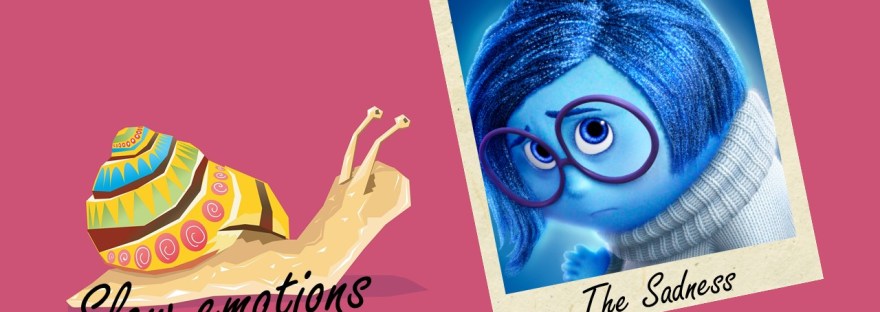
The sadness

In the past couple of years, public debate around mental health and emotions has opened up. In the UK in particular there is much information available about depression and anxiety, and despite that, many of us use the term “depression” in everyday life to describe our state of mind when we feel sad.

This underlines when sadness is an almost alien emotion, something we are no longer used to talking about. In past centuries, sadness was an appreciable and desirable feeling, to the point of becoming a “divine” feeling, a kind of positive mourning given by the awareness of one’s spiritual lack of respect for God.

In the last century, scientific and mainstream theories have spread about the pursuit of happiness, a sort of cult in which the peremptory order is the pursuit of one’s happiness. Furthermore, the theories of positive emotions have emphasized positive emotions, such as joy and happiness, leaving out or demonizing emotions such as sadness or anger.

It is certainly more satisfying to feel joy than sadness. But why, then, is sadness one of the basic emotions? What is so special about it?

There are many theories about the function of sadness, which can coexist or be taken individually. In addition to the emotion of sadness, they also take into account other shades of sadness such as complex emotions and feelings. We will delve into topics such as complex emotions and feelings in future articles.

Before proceeding, I want to emphasize that sadness is different from depression in quality and quantity. Freud, for example, declared that depression, or melancholy, contained feelings of guilt that were unrelated to sadness. Furthermore, if sadness plays an adaptive role, as we will see, depression can be seen as a failure of sadness, the result of which is a state that is maladaptive to life circumstances.

Sadness as protection.

These theories emphasize the safeguard function that this emotion has, and four safeguards have been identified. Sadness is primarily the reaction to a loss. We feel heavy, with little energy and we tend to withdraw from society. The first element is that of alarm. Sadness tells us that when we lose or move away from our community, we will lose energy, thus helping to maintain social cohesion. A second element is that of disengagement. When we unequivocally lose something or someone, sadness and the loss of energy help us to withdraw our energies toward the object or person we have lost and then redirect them to new goals and new goals. The third protective factor is that of conservation, in which we tend to restrict iterations with the outside world when we feel most vulnerable. A sort of narrowing of interests is created, and the energies are used only for essential activities. The fourth element is accuracy. A lot of research has shown that when we are sad we are more sceptical and critical, making us less vulnerable to scams. Not only that, when you are sad, some cognitive skills improve, such as memory and attention to detail, and you are less prone to having false memories.

Sadness is an expression of care.

These theories have highlighted four elements in which sadness plays an important role in healing. The first element they highlight is love. It may seem strange to speak of love in this context, but we can speak of it in terms of absence, in which sadness is the expression of the absence of love. A second element is sadness as a longing desire of the loved one, that sadness given by detachment and impregnated with the hope of a future reunion. This type of sadness testifies to love for others and suffering when the person is absent. Literature, it has inspired poets, artists and writers. Sadness as compassion, on the other hand, emphasizes the empathic ability to feel sadness for the condition of others. Furthermore, sadness has the ability to elicit in others a behaviour of care towards those who feel sad. If we see someone who is sad, we tend to console and support them. People who suffer from depression, unlike those who feel sad, move feelings of frustration, annoyance, revulsion, or anger in others.

As we have seen, sadness, although it is a feeling that we would never like to feel, has had an important function in our evolution by favouring aggregation in groups and caring for others. Some theories also emphasize its importance for our personal and social growth.

Sadness as a flourishing

As we have seen sadness moves one to compassion, but evolutionarily speaking, it could be dictated by one’s interest, such as protecting one’s offspring. Sadness as a moral sensitivity, on the other hand, goes beyond compassion for the people we love or know. This is why many religions promote this feeling of sadness. Sadness, in this case, is seen as a generator of psychological development. Abraham Lincoln is said to have had compassion for the problems of the world, and taking action to address and solve these problems was rewarding. In Buddhism, compassion is a feeling that must be cultivated through meditation, generating personal growth. The sadness we feel after a trauma or illness can be a driver of personal growth. Working with people with cancer, I saw how many saw their disease as an opportunity for personal growth, striving to improve themselves and the communities they were a part of.

In light of this, we can say that sadness is an important emotion, which must be accepted, understood and processed to allow us to grow.

And you? Have you ever wondered about sadness? Here are some questions you might ask yourself.

How in touch are you with your sadness? When was the last time you felt sad? Did you recognize yourself in any of these shades of sadness?

Bibliography

Smith, T. W. (2017). Atlante delle emozioni umane: 156 emozioni che hai provato, che non sai di aver provato, che non proverai mai. Utet.

Lomas, T. (2018). The quiet virtues of sadness: A selective theoretical and interpretative appreciation of its potential contribution to wellbeing. New Ideas in Psychology49, 18-26.

Slow Emotion

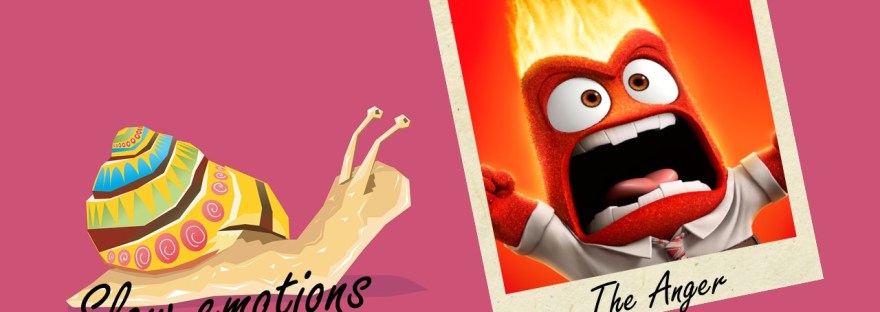
The Anger

Our perception, as well as our emotions, guide and shape the reality in which we move. The emotions and attributions we associate with them guide our future behaviours.

We attribute the label “anger” to that emotion that activates our body, makes us “boil our blood”, clench our fists and make us want to act immediately. As we already know, the physiological activations of different emotions are very similar to each other, so when we attribute the label of anger, we do it based on the situation we are experiencing and our past experiences with this emotion.

Very often, when we talk about anger, destructive scenarios and violence are associated with it. Of course, emotions activate our bodies and somehow prepare us for action. However, it is important to separate the “angry” action from the emotion of anger that one feels. Furthermore, there are so many different ways and different situations in which to act angry. For example, Seneca believed that anger was a vile emotion and that it was unseemly to experience this type of emotion in the streets because it led to unnecessary quarrels and unseemly fights. On the other hand, he believed that the use of this emotion in the war was fundamental, which made soldiers stronger and more ready for action.

The attitude towards this emotion has changed over the centuries. At times the anger was inconvenient, something that was best hidden. On other occasions, however, this emotion was considered essential to keep young or to help patients, after a long debilitating illness, to regain strength and recover completely.

At the beginning of the twentieth century, Freud established that the non-expression of anger could lead to the appearance of physical symptoms. In the therapeutic field, around the 1950s in America, it was considered essential that drug-addicted patients felt a fit of strong anger, even losing their temper, to get rid of the false self and begin the healing process.

Today we have a clearer role of our culture and our experiences in experiencing emotions. Based on the attributions we make, we see reality differently and behave and act differently.

Let’s take a small example. A woman has recently been living with her boyfriend, after many years of engagement. When he leaves the bathroom untidy, she feels a lot of anger. Based on the attributions of the boyfriend’s behaviour, our friend will make different decisions. She might consider that her angry reactions are unmotivated because it is the woman who should look after the house; therefore, she will tend to feel wrong about that emotion. Or she might decide that since her boyfriend grew up in an extremely male-dominated environment, he wasn’t taught to look after the house. In this case, her anger could be directed at his family or be channelled into the feminist political fight. Or, she might think that her boyfriend should pay more attention to her needs, and read his leaving the bathroom messy as disrespectful. In this case, the anger she feels would be directed to assertively asking her boyfriend to fix the bathroom after using it.

In some cultures, anger is an important feeling for moving things. The Ilongot people, a small hunting people in the Philippines, call liget a kind of angry force. In this population, anger, the liget, has a highly positive connotation and allows them to move, hunt and carry out all daily activities.

What causes anger? Anger was an important emotion for our survival. It came to our aid in all those situations in which we had to defend our territory from incursions by animals or other enemy groups who wanted to grab our resources.

But what makes us angry? Generally speaking, we can say that the emotion of anger is triggered when we feel hurt, when our expectations have been disappointed or when our needs have not been met. Feeling anger in these situations helps us change the situation and meet our needs.

When anger is violently acted out it is certainly no longer useful, neither to us nor to others. For example, it is legitimate to get angry because our colleague has taken our parking space. We feel our bodies boil for a moment and feel the need to do something to change the situation. Helpful anger guides us to speak assertively and firmly to the co-worker and berate him for his inappropriate behaviour. If, on the other hand, we decide to smash his car, we will most likely end up fired and the parking space would be the least of our problems. Feeling anger is okay, acting violently is not.

Anger can have different shades, and be triggered by different situations, based on our personal history and our culture of belonging. Do you know what makes you angry?

Here are some simple questions to reflect on this emotion:

What emotion of anger did you feel? (Irritability, frustration, annoyance, anger?)

What thoughts were associated with emotion?

What body sensations have you experienced?

What triggers/situations triggered this emotion?

If you want help exploring your emotions, contact me!

Bibliography

Smith, T. W. (2017). Atlante delle emozioni umane: 156 emozioni che hai provato, che non sai di aver provato, che non proverai mai. Utet.

Harper, F. G., & LPC-S, A. C. S. (2020). Unfuck Your Anger: Using Science to Understand Frustration, Rage, and Forgiveness. Microcosm Publishing.

Slow Emotion

What are emotions?

Here is the first article dedicated to emotions.

We feel emotions daily, but often we don’t stop to think about how emotions work. If we were to describe how emotions work, the first thing we should do is define emotion: what is emotion? Answering this simple question is not that simple. There are many theories of emotions, and they differ from each other in various aspects, including the definition of what an emotion is.

What scientists agree on is that emotions: 1) have a “multi-system” structure, that is, they involve different structures of our body and brain; and 2) play an important role in the decisions we make, in the judgments we formulate and in the logical reasoning we implement.

In general, we can define emotion as an intense and short-lived response to a stimulus. The stimulus can be either an external situation or an internal stimulus, such as a thought or a memory.

The intense response concerns both physical activation and the experience that accompanies physical activation. When we get excited, whatever the type of emotion, our body activates and transforms, such as heartbeat, breathing, sweating, vascularization, salivation, pupillary movements and musculature (mimic).

Emotions are an automatic response to a stimulus and each person can experience different emotions in front of the same stimulus. When a response is automatic, it means that it is independent of our will, when we feel an emotion.

It should follow that since emotions are automatic and independent of our will, we are at the mercy of what we feel … But is this so?

The physical activation and the emotional experience that accompanies it, in reality, are quite conscious reactions. Think about the last time you felt embarrassed, and your cheeks turned red, making your mood clear to everyone, or about the last time you felt joy and a smile appeared on your face!

What is automatic, or unconscious, is everything that happens before the emotions manifest. Emotions are strictly connected to the cognitive evaluation we make, unconsciously, of what is happening around us.

In a famous study by Schachter and Singer in 1962, they devised a very ingenious experiment. People who participated in the study were told that the researchers needed to experiment with a mix of vitamins, called suproxin, for vision. For this reason, they were given an injection and would have to wait in the waiting room. In reality, they were given epinephrine, which gave them a physiological activation of arousal. The researchers divided the participants into four groups. The first group, epinephrine-informed, were injected with epinephrine and were told that vitamins could cause physiological activation (such as, for example, increased heart rate, heavy breathing, sweating). The second group, called epinephrine-not-informed, was given epinephrine and told that the vitamins were harmless. The third group, epinephrine-misinformed, was given epinephrine and told that the vitamins could give headaches, drowsiness, or other similar symptoms. Finally, the last group, placebo-uninformed, was injected with a saline solution and told that the substance was harmless. Half of the participants of all four groups were exposed to a cheerful situation. In the waiting room (where an accomplice and a participant in the experiment were present) the accomplice of the experimenters played with the objects in the room, laughed and was visibly in a good mood. The other half of the participants were given a questionnaire with irritating questions, and the accomplice inside the room was altered, up to snatching the questionnaire, railing against the researchers and leaving the room.

From this experiment, it emerged that the two groups, epinephrine-not-informed and epinephrine-misinformed, showed a strong emotional reaction congruent with the situation in which they were assigned. While the other two groups, informed epinephrine and placebo, experienced an attenuated emotional response.

This means that, unconsciously, when we feel an emotion we give an evaluation and a judgment on the situation we are experiencing. The two groups, epinephrine-not-informed and epinephrine-misinformed, attributed the physiological reaction to a wave of strong anger or a strong joy, depending on the situation they were experiencing. The epinephrine-informed group, on the other hand, attributed the strong physical activation to the administration of the vitamin and not to emotion.

There are no specific physiological activations for an emotion. For example, if we have a heart-pounding for a run, we don’t associate any emotion with it. But if noticing the heartbeat, we see the person we like in front of us, we could feel joy, and if the same heartbeat occurs when there is a sudden noise, we could feel fright or surprise. Even in a fraction of a few seconds, we assess the situation or predict events based on the clues available.

Our unconscious evaluations are strongly influenced by our way of seeing life, of approaching the world, of our reference culture and of the system of values ​​that guides us.

Returning, therefore, to our question, we can say that we are not totally at the mercy of our emotions, because they are guided by our values, our culture and the unconscious assumptions and representations we have of the world.

From this, it follows that emotions tell us something about ourselves and at the same time, by acting on our way of thinking and seeing the world we can slowly change our way of feeling. We, therefore, can change how we feel. It is certainly not an instant process, but a journey into our way of seeing and feeling, and in our unconscious.

This year is dedicated to the journey into emotions, to the different nuances and implications.

You are ready?

To start, I invite you to watch this video You aren’t at the mercy of your emotions — your brain creates them | Lisa Feldman Barrett

Bibliography

Schachter, S .; Singer, J. (1962). “Cognitive, Social, and Physiological Determinants of Emotional State”

https://www.youtube.com/watch?v=0gks6ceq4eQ

private life, work life

Life and work: new challenges and new balances

These days, the difficulty of finding seasonal workers for the summer is being addressed in public dialogue. The public dialogue is focusing on various aspects, carried out by the “fans” of this or that orientation. There are those who argue that the state is responsible for this phenomenon, for the introduction of citizenship income. We find supporters of the rhetoric of the employer, rich and arrogant ready to exploit to the bone every worker he comes across. Another point of view that finds space in social networks is the rhetoric of young people who have little desire to work. Others complain about a structure unsuitable for work, due to the tax burden or too much bureaucracy, which forces workers to hire illegally, especially in the tourism sector.

Even across the Channel in the UK, the world of work is undergoing many transformations, in which it is difficult to find staff in the tourism and catering sector.

In Italy, the problem of work is certainly not new, and the pandemic has accelerated and exacerbated processes already underway in the world of work for some time. In Italy, for example, many workers do not have access to the safety devices required by law, they work many hours and the salary, even when we are talking about specialized work, such as a psychologist or a lawyer, is underpaid. White deaths in 2020 increased by 16.6% to 1,270, a number too high for a country where work is an established right.

Internationally, Italy, Nations are in the process to reduce the amount of working hours during the week.

The Republic recognizes the right to work for all citizens and promotes the conditions that make this right effective.

Every citizen has the duty to carry out, according to his possibilities and his own choice, an activity or a function that contributes to the material or spiritual progress of society.

ITALIAN CONSTITUTION, Article 4

Let’s take a few steps back.

Work, as we understand it today, has undergone profound transformations. Before the industrial revolution, private life and working life coincided and the times were marked by nature. Time, therefore, was marked by life in the fields, by the harvest, by sunrise and sunset. The clock made its first appearance around 1200 in Europe. Time, punctuated by seconds, minutes and hours, slowly began to creep into everyday life, to establish the working hours, the time for meals, for prayers and for going to bed. The industrial revolution led to the separation of work and personal life. About 80% of the work was based on physical effort. Workers were paid by the hour and their work was mostly assessed on the amount of production or physical effort made over a period of time. In today’s world of work, there has been a profound transformation that has led, to date, to have 80% of the work constituted by immaterial and non-measurable labour per hour or per production. The value of a company today is constituted by knowledge, working relationships with other companies or institutions, processes and situations.

If the world of work has undergone these profound transformations, which are taking place at a rapid pace, the same cannot be said of the bureaucratic systems or the management of workers, which are valued by the hour or in terms of production.

In addition, post-war economic well-being has increased society’s awareness of the need to accompany this growth with psychological well-being and respect for human rights and workers’ rights.

The Pandemic has brought about another, notable, transformation of work. The introduction of teleworking / agile working / smart working / remote working/working from home. It has many names, but the practice is the same, questioning the work-life dichotomy. The International magazine in a recent article wrote about the possible transformations this will have in the future social life. But what are the effects on the personal life of each of us?

During the pandemic, work forcefully entered the homes of many workers, jeopardizing the already fragile family balance, the management of home environments and the time dedicated to working. Work meetings are doubled during this phase, working hours have expanded and work multitasking has been divided between home/family care and work attention.

The summer debate regarding the shortage of staff such as lifeguards and waiters shows that the transformation that has taken place this year is not fully understood. From a purely practical and pragmatic point, we can see that many of the workers in these sectors have had to reinvent themselves, and find other ways of living. And many have done so. But there is more, it was not just a career change.

This year has been for many, if not all, a re-evaluation of their lifestyle, with a focus on their mental and physical health. There is widespread awareness of the importance of having a good balance between private life and working life. The pandemic has literally put us in front of death, a showdown. What really matters to us? How do we spend our time?

Some research suggests that when we feel that we have enough time to meet our social needs, we feel better, more satisfied, and happier. Conversely, when we feel we don’t have enough time to cultivate satisfying social relationships, we feel more frustrated, and the person’s general well-being deteriorates. In the long run, the state of stress and frustration could lead to real mental illnesses, such as anxiety, depression, and panic attacks. Just think of the overtime hours during the summer, and the exhausting shifts of the operators in the holiday villages to realize how exhausting working in these sectors can be.

Work structures and defines, very often, the place where we live, the people we hang out with and the friendships we make. It establishes our economic power and the position we have in society. Work, at times, determines our identity. Some jobs, such as a doctor or a psychologist, are a real vocation to care for those who find themselves in a situation of difficulty or illness. The advocacy responds to the desire for justice. The police embody the values ​​of protection and social harmony. Obviously, not everyone undertakes these professions for a sort of virtuous call, but even if the reasons are purely economic or due to chance, a certain type of work affects the vision we have of the world, the experiences we will have and the construction of our own identity (which is always a work in progress).

The work environment determines our well-being. If at work our skills are highlighted, appreciated and cultivated, we feel more fulfilled and satisfied with ourselves. We would have more energy to improve and cultivate job interests, and new skills and keep up to date.

On the contrary, in a hostile work environment, in which one does not feel appreciated or in which it is difficult to progress at the working level, feelings of demotivation, bad working relationships, tensions and frustrations spread. This undoubtedly leads to a deterioration of one’s psychophysical state which can spread to other areas of life, from social relationships to family life.

Even when we are in a peaceful work environment, we can encounter frequent obstacles, which in the long run negatively impact our mental health. Some research, for example, highlights the difficulty of those working who have a different circadian rhythm (sleep-wake rhythm). Research from the University of Washington Foster School of Business has shown that managers who define themselves as morning people judged better (also from a pay point of view) workers in the first shift, from 9.00 to 15.00, compared to workers in the second shift, 11.00 -19.00. Managers who called themselves not very early risers, on the other hand, showed no significant preference for either group, treating early risers and second shift jobs equally.

Nowadays, especially among Millennials (those born between 1991 and 1995), there is a greater awareness of the role of work in their lives and a greater need to have a balanced family and working life. Proofs of this are the recent short week work experiments, with four working days for equal pay. Spain is funding one of these initiatives. Some European states are considering extending paternity leave for the same period granted to the mother. More and more companies are offering flexible hours or remote work for their employees (some companies have successfully studied and applied these strategies even before the pandemic) to allow their workers to reconcile family and work life.

The challenge we are about to face, both on a personal, social and political level, is to reconcile one’s internal clock with working, family and social life. In the name of bio-psycho-social well-being to build a psychologically resilient society to face new and old challenges.

If your work-life is deteriorating your well-being, contact me.

Bibliography

Bosch, M. J., & Hernández, T. (2020). A Closer Look to Millennials in Chile: How They Perceive the New i-deal Worker. In The New Ideal Worker (pp. 49-72). Springer, Cham.

Gröpel, P., & Kuhl, J. (2009). Work–life balance and subjective well‐being: The mediating role of need fulfilment. British Journal of Psychology100(2), 365-375.

https://www.ilsole24ore.com/art/nel-2021-oltre-due-morti-lavoro-giorno-pesa-anche-l-impatto-covid-AEGhOFG?refresh_ce=1

https://www.internazionale.it/opinione/annamaria-testa/2021/04/07/lavoro-agile

Kring, C. (2020). The New Ideal Worker Is a Super Navigator. In The New Ideal Worker (pp. 125-135). Springer, Cham.