
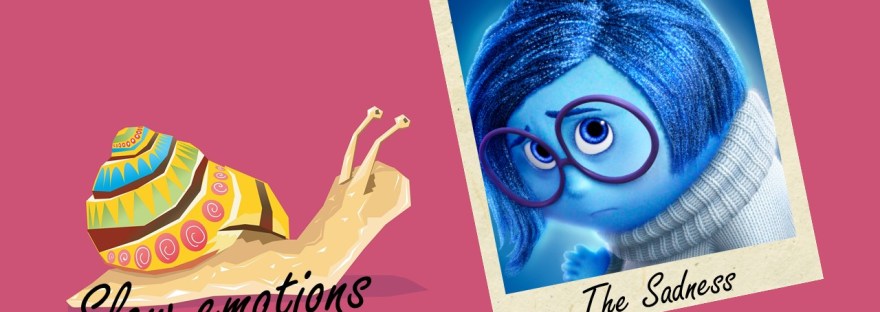
In the past couple of years, public debate around mental health and emotions has opened up. In the UK in particular there is much information available about depression and anxiety, and despite that, many of us use the term “depression” in everyday life to describe our state of mind when we feel sad.
This underlines when sadness is an almost alien emotion, something we are no longer used to talking about. In past centuries, sadness was an appreciable and desirable feeling, to the point of becoming a “divine” feeling, a kind of positive mourning given by the awareness of one’s spiritual lack of respect for God.
In the last century, scientific and mainstream theories have spread about the pursuit of happiness, a sort of cult in which the peremptory order is the pursuit of one’s happiness. Furthermore, the theories of positive emotions have emphasized positive emotions, such as joy and happiness, leaving out or demonizing emotions such as sadness or anger.
It is certainly more satisfying to feel joy than sadness. But why, then, is sadness one of the basic emotions? What is so special about it?
There are many theories about the function of sadness, which can coexist or be taken individually. In addition to the emotion of sadness, they also take into account other shades of sadness such as complex emotions and feelings. We will delve into topics such as complex emotions and feelings in future articles.
Before proceeding, I want to emphasize that sadness is different from depression in quality and quantity. Freud, for example, declared that depression, or melancholy, contained feelings of guilt that were unrelated to sadness. Furthermore, if sadness plays an adaptive role, as we will see, depression can be seen as a failure of sadness, the result of which is a state that is maladaptive to life circumstances.
Sadness as protection.
These theories emphasize the safeguard function that this emotion has, and four safeguards have been identified. Sadness is primarily the reaction to a loss. We feel heavy, with little energy and we tend to withdraw from society. The first element is that of alarm. Sadness tells us that when we lose or move away from our community, we will lose energy, thus helping to maintain social cohesion. A second element is that of disengagement. When we unequivocally lose something or someone, sadness and the loss of energy help us to withdraw our energies toward the object or person we have lost and then redirect them to new goals and new goals. The third protective factor is that of conservation, in which we tend to restrict iterations with the outside world when we feel most vulnerable. A sort of narrowing of interests is created, and the energies are used only for essential activities. The fourth element is accuracy. A lot of research has shown that when we are sad we are more sceptical and critical, making us less vulnerable to scams. Not only that, when you are sad, some cognitive skills improve, such as memory and attention to detail, and you are less prone to having false memories.
Sadness is an expression of care.
These theories have highlighted four elements in which sadness plays an important role in healing. The first element they highlight is love. It may seem strange to speak of love in this context, but we can speak of it in terms of absence, in which sadness is the expression of the absence of love. A second element is sadness as a longing desire of the loved one, that sadness given by detachment and impregnated with the hope of a future reunion. This type of sadness testifies to love for others and suffering when the person is absent. Literature, it has inspired poets, artists and writers. Sadness as compassion, on the other hand, emphasizes the empathic ability to feel sadness for the condition of others. Furthermore, sadness has the ability to elicit in others a behaviour of care towards those who feel sad. If we see someone who is sad, we tend to console and support them. People who suffer from depression, unlike those who feel sad, move feelings of frustration, annoyance, revulsion, or anger in others.
As we have seen, sadness, although it is a feeling that we would never like to feel, has had an important function in our evolution by favouring aggregation in groups and caring for others. Some theories also emphasize its importance for our personal and social growth.
Sadness as a flourishing
As we have seen sadness moves one to compassion, but evolutionarily speaking, it could be dictated by one’s interest, such as protecting one’s offspring. Sadness as a moral sensitivity, on the other hand, goes beyond compassion for the people we love or know. This is why many religions promote this feeling of sadness. Sadness, in this case, is seen as a generator of psychological development. Abraham Lincoln is said to have had compassion for the problems of the world, and taking action to address and solve these problems was rewarding. In Buddhism, compassion is a feeling that must be cultivated through meditation, generating personal growth. The sadness we feel after a trauma or illness can be a driver of personal growth. Working with people with cancer, I saw how many saw their disease as an opportunity for personal growth, striving to improve themselves and the communities they were a part of.
In light of this, we can say that sadness is an important emotion, which must be accepted, understood and processed to allow us to grow.
And you? Have you ever wondered about sadness? Here are some questions you might ask yourself.
How in touch are you with your sadness? When was the last time you felt sad? Did you recognize yourself in any of these shades of sadness?
Bibliography
Smith, T. W. (2017). Atlante delle emozioni umane: 156 emozioni che hai provato, che non sai di aver provato, che non proverai mai. Utet.
Lomas, T. (2018). The quiet virtues of sadness: A selective theoretical and interpretative appreciation of its potential contribution to wellbeing. New Ideas in Psychology, 49, 18-26.
 Dr Vanessa Pozzali