
In the previous article, we tried to define emotions. We have learned that these are fast and short-lived changes in physiological functions, accompanied by an emotional experience. Furthermore, we have seen that several theories deal with emotions.
Today let’s look a little more closely at the evolutionary theories on emotions. Evolutionary theories began with Darwin’s observations of facial expressions in primates and emphasize the evolutionary role of emotions.
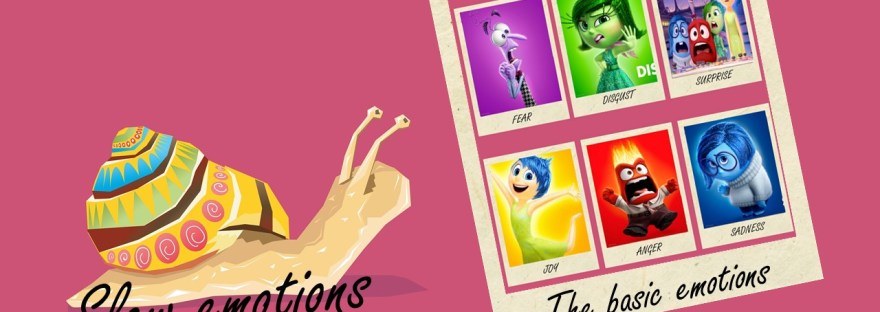
Several studies have hypothesized the existence of basic emotions, common to all human beings. These theories emphasize the adaptive role of emotions in human development and the role that they have played in our history.
This hypothesis is made because every human being, regardless of the culture they belong to, is capable of distinguishing at least six emotions. If every man on earth experienced emotion, emotion must have played an important role in our evolution.
Ekman, a famous scholar of facial expressions, photographed several Western people as they experienced different emotions. He took these photographs to several people from other cultures, especially oriental cultures, and asked them to describe the emotions they saw. He did the same with a remote population of New Guinea, where newspapers and television had not yet reached. All the populations involved were able to correctly identify six emotions: anger, joy, disgust, sadness, fear, and surprise. Ekman and his collaborators found that these emotions were common in all cultures, although they emphasized a strong influence due to the culture they belong to.
The researchers were able to identify that event before the emotions are common to all human beings. The stimuli were identified conceptually, i.e., not listing a precise stimulus, but a concept. For example, it was found that in every culture, people feel sadness when they lose a significant person. Culturally, however, what is meant by a significant person change.
There are several advantages expressed by emotions for our development. First of all, they allow you to be able to relate to other people. Studies have shown that people who suffer from facial paresis and are unable to express their emotions on their faces have a harder time establishing new relationships. Emotions also communicate whether we are safe. For example, if we see another person with a disgusted expression after smelling something, we probably won’t eat it because it could be poisonous. Or, if we imagine ourselves in the forest and see a frightened person, we will prepare ourselves to identify the source of the danger and act accordingly. This is another function of emotions. They prepare our bodies for action. If we are angry, it will most likely be because an obstacle prevents us from reaching the goal (such as, for example, hunting) and body activation helps us to stay focused and to use all the energy necessary to remove the obstacle. When we are scared, our body prepares for action, such as fleeing from danger, attacking it or pretending to be dead to avoid being attacked.
Emotions, therefore, help us understand what is happening and also where we are with the achievement of our goals. Also, Ekman and his researchers have identified that emotions help us in the evaluation. (In the last article we saw how much the unconscious evaluation is crucial in experiencing an emotion). Anger tells us that an obstacle has stood in the way of achieving our goal. Joy signals the achievement of the goal. The sadness that the goal was not achieved or maintained (as above, we did not maintain the relationship with the person who passed away). Fear signals an expectation of failure to achieve the goal.
Evolutionary theories show that emotions “are not requested and not chosen by us” and have to do with past experiences and the predictability of events.
In the next articles, we will explore the basic emotions one by one!
Stay tuned!
Bibliography
Ekman P., Basic Emotions. In: T. Dalgleish and M. Power (Eds.). Handbook of Cognition and Emotion. John Wiley & Sons Ltd, Sussex, UK, 1999.
 Dr Vanessa Pozzali