Cancer and dreams. Pic by Comfreak - Pixabay
Cancer, Relationships

Dream and oncological disease

‘’We suffer from dreams.

We heal with dreams.’’

Gaston Bachelard

The word ‘tumour’ evokes a certain that in the minds of all of us. Usually, they are war scenarios, made of struggle and resistance against the enemy: cancer. There is a strong fight for its annulment. Either us or him.

Although this type of narrative is still very present in the stories of cancer patients and their families, science and technology have changed the outcome and development of this battle.

Nowadays we know that survival from cancer is almost 50%, and the percentage rises to 80% for breast cancers. This enemy is becoming less and less powerful and, on some occasions, almost harmless (Prevention plays a fundamental role in this).

We are more often witnessing the phenomenon called ‘chronicisation of tumour pathology’. This means that more and more people are living with the condition for long years (reaching ten years and more in some cases more).

It does not matter how armed this enemy is. There are those who received the diagnosis in the prevention phase and after a small local operation had no other complications. There are those who have gone a long way and regularly visit their oncology department. It does not matter the statistics, the severity of the disease or whether it is a benign or malignant tumour.

Everyone finds himself/herself facing what the word ” tumour ” evokes. A battle against death in which the outcomes are, at best, uncertain.

This can induce a state of shock when the diagnosis is received. We are confronted with our limits and we realise that we are not immortal beings. We usually tend not to think about the possibility of one day being able to die. Receiving a diagnosis of this type puts us in front of this possibility.

One wonders about the meaning of one’s existence; discuss choices past and future and review priorities.

More and more often we are witnessing a change in the narrative, on the part of patients, regarding cancer.

An enemy to be destroyed.

An intrusive and unpleasant travel companion.

A roommate.

An opportunity.

A rebirth

This change of narrative and perspective corresponds to a therapeutic path aimed at better discovering oneself, one’s desires and one’s limits. A journey inside your own unconscious to rediscover the hidden or denied parts of yourself.

Dreams often make a great contribution in this regard.

For Adler, the dream “is a particular stance towards life” and its purpose is not so much its interpretation or the unveiling of the censored instances of our subconscious, but the feelings they leave within us.

More than its interpretation, therefore, the construction of meaning made by the dreamer is important. The construction of meaning can be done bought when the dreamer is “awake” and during the creative process when the dream is constituted.

Through this last perspective, in a clinical study by Bovero et al., it emerged that women with cancer have different dreams than other women who had never been confronted with this disease.

It emerged, for example, that women with breast cancer expressed negative emotional experiences related to the body self, body image and sexual identity in their dreams, as if “the mind no longer felt at home in the body”.

The positive emotional experiences of these women concerned the need for tenderness, care, beauty, and sexual desire. The positive emotional experiences, on the other hand, expressed by women with lung cancer mainly concerned a search for protection and a need for support.

Being able to make sense of our dreams, compare ourselves with them, admire their (and consequently our) creative force makes us remember and reaffirm our stance towards life, “a bridge built into the future” (Adler).

This process of awareness and construction of meaning strengthen the ability to deal with the disease, helping us, even through dreams, to affirm our stance towards life.

Therefore, through dreaming, the treatment process for fighting oncological disease can be consolidated.

To find out more, contact me.

Adaptation of an article I wrote for psycho-oncologists in 2016 (link no longer available)
bereavement, Relationships

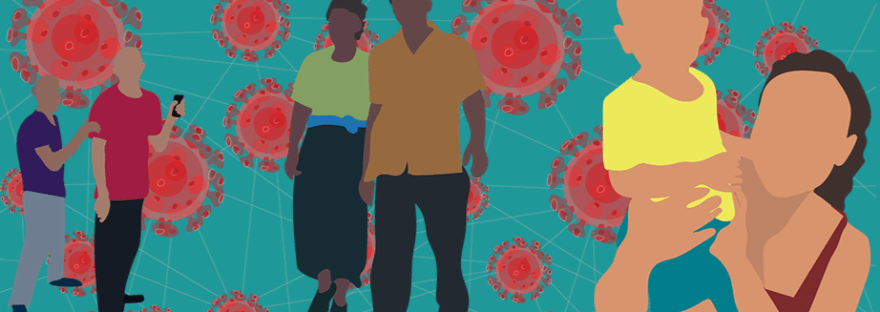
Grief and bereavement at the time of Covid-19 (SARS-CoV-2)

One of the first thoughts that come to our mind when thinking about bereavement is the funeral. You imagine several people dressed in black around a coffin.

It sounds like a banality, but the social and ritualistic aspect of sepulchre helps people cope with the stages of mourning.

During the pandemic, the ritualistic and social aspect of mourning was lost. It was not possible to perform funeral services (as in Italy) or the number of participants was reduced to a few intimates (as in the UK). 

There has not (yet) been a collective ritual that symbolizes this loss, such as the sound of bells, a minute’s collective silence, a monument or something.

Attempts have been made to try to humanize the statistics proposed by the various states. For example, the BBC in England has launched an initiative to give a face and a name to the number of victims given by statistics every day. Coronavirus: Your tributes to those who have died.https://www.bbc.co.uk/news/uk-52676411

Socially we can see the psychological mechanisms that contributed to the denial of death. The simplification of death in statistical numbers, the repetition of the motto “everything will be fine”, denial of the pandemic, the prohibition to participate in funeral celebrations. They were acts due to the protection of public health, but they also had the function of denying the great suffering that (as a community and as individuals) we were not ready to face.

On the other hand, mourning is a natural and almost physiological event that every human being and every culture faces.

‘Phases’ have been identified concerning the processing of bereavement. The word ‘phases’ is in quotation marks because they are not rigidly successive phases: they can also be skipped or recrossed several times during mourning processing or can be included. They have been identified by Elisabeth Kübler-Ross, a Swiss-American psychiatrist, and studied by other professionals and psychotherapeutic orientations. For example, the same stages may concern the discovery of a disease that can lead to death (even just evocatively).

The five main steps are:

Denial.

During this stage, the person who experiences a loss is not able to cope with the reality and pain associated with it. When the denial is total the person acts as if nothing had happened. When it is partial you experience some moments when you act as if it had not happened (for example, we find ourselves calling that person as was usually done). This is a defence mechanism that serves to protect against great suffering that, at any given moment, we are unable to deal with.

In the case of death due to Covid-19 many people (especially in the first period) accompanied the loved one to the hospital, relatively in good health and death occurred within a few days, without being able to see the loved one again. This condition often prevents people from accessing the later stages of mourning, making processing a very difficult and even more painful path.

Anger

At this stage, the anger is violent and blind. In the case of religion and faith, a feeling of anger towards otherworldly deities can develop. The individual finds her\himself not praying or not attending places of worship. Anger can also erupt towards institutions, the care team (if bereavement is due to illness) or the person himself (‘Why did you leave!)’. Anger is an important and necessary feeling and helps people mobilize their inner resources and adaptability.

In the COVID-19 period, anger can be directed at those who complain about the restrictions or towards negationist people. There is a risk of embarking on a political battle driven by anger and of taking away one’s resources from the processing of mourning. It is important that you have sufficient energies to devote yourself (also) to yourself and your own path.

Trading

At this stage, the anger is attenuated. It is like you want to erase what happened. It is believed that doing a certain action (praying, doing good) can convince God\fate\others to erase what happened.

At this time due to the Covid-19, we try to negotiate with fate: ‘If I commit myself to respect the rules and helping the neighbourhood, then they will call me from the hospital to tell me that they have made a mistake before!’. The lack of a ritual that accompanies the death of the loved one can make us linger more strongly in the possibility of an uncharitable false hope.

Depression

This phase is accompanied by feelings of deep sadness, a sense of helplessness and inadequacy. These feelings are a normal and physiological reaction to the event of a loss. Some people report feelings of guilt if they find themselves laughing at a movie joke as if they have forgotten the deep sadness they feel. It is normal to be able to experience different moods throughout the day.

Due to the Covid-19, this period is characterized by isolation and safe distances. it is easier to let go of these deep feelings, especially when the social and relational network is missing. If this state becomes deeply disabling or nostalgia is so deep that you would like ‘to reach’ your loved one, it is important to talk to your doctor about it and ask for help as soon as possible, even now!

Acceptance

At this stage, a sense of awareness and acceptance of objective reality is experienced. Alternative ways of relating to the deceased are put in place. For example, some people go monthly to the cemetery to tell their progress. Other people find a way of internal dialogue with their loved ones. Some others share the memory\fact\story of the deceased. In this phase, we begin to redesign and redefine one’s goals and projects, without the loved one anymore.

The Covid-19 period is characterised by insecurity job and economic precariousness, it may be difficult to re-modulate one’s objectives and projects. It is important to look within yourself and be able to recognize your resources and resilience.

This description is just an indication of what might happen during this process. Everyone expresses a personal and peculiar experience with respect to their own life experiences and personal peculiarities.

Mourning is a life experience that profoundly changes those who live it. Mourning did not turn, it transforms. Pain, although greatly attenuated, accompanies people throughout their lives. This pain takes different and more manageable forms when we can accept the event, establish a new way of relationship with the deceased person and be able to return to remodelling projects and objectives.

This process usually does not require medical or psychological attention, but some factors can complicate these steps by requiring psychotherapeutic intervention to help with processing.

Many studies agree that in the mourning process there are some factors that can facilitate or complicate this experience.

Personological factors

Our attitude to life, our way of thinking and our acting can influence the path of mourning.

The intensity of affective bonding

The kind of relationship we have with the deceased person can aggravate or facilitate bereavement. The more intense the relationship, the more painful the bereavement. Sometimes when the relationship has been confrontational or ambivalent this can complicate the mourning process.

Manner of death

Depending on cultural influences, accompanying your loved one during a sudden illness or death can help or be unfavourable in mourning processing.

Socio-economic implications

Depending on social influences, the death of the loved one can aggravate economic position or social prestige or prevent those who remain from achieving important social objectives. This may or may not complicate the mourning process.

The pandemic has aggravated the process of mourning by adding the trauma of Covid-19. So much so that we can talk about post-traumatic stress syndrome. Symptoms can be:

  • Intrusive images of the deceased.
  • Avoidance conduct.
  • Sensations of estrangement.
  • Avoidance behaviours.
  • Difficulty concentrating.
  • Sleep disturbances.

If these symptoms arise you can ask for help.

To find out more, contact me.

Addictions
Addictions, Relationships

Addictions

I tried to help him/her in every way: every time I tried to talk about the problem, anger exploded. There was no way to recognise the addiction. This severely affected his/her family relationships, and soon his/her children began to show their malaise at school and in relationships.

Relative of a person with pathological addiction.

Before I was unable to express my difficulties and my feelings. It has been a long journey that has led me to confront my problems and sufferings that I previously did not want to hear about and tried to put out with addiction. Something in me has changed with therapy. Now I know that I always must take care of this, or I will go back to doing the same.

A person suffering from pathological addiction.

When it comes to addictions, a distinction is often made between substance addictions, such as cocaine, heroin or alcohol, and behavioural addictions, such as gambling or compulsive shopping. Substance addictions often seem more severe than behavioural addictions. The fact that a substance is involved which affects the biochemistry of our brain leads us to think that it is the substance that controls the person who uses it, while in the second case the responsibility for addiction lies entirely with the individual.

To date, we know that there is no substantial difference between these two types of addiction. Both substance addictions and behavioural addictions can leave a visible trace in the neuronal network that makes up our minds.

The “New addictions” include gambling, compulsive shopping, and new technologies, such as addiction to TV/video games/social networks/internet, work addiction, sex addiction and addiction to romantic relationships. The new addictions also concern health-related behaviours, such as orthorexia (the excessive and inordinate need to eat in a hyper-healthy way) or undergoing obsessive and dependent physical training.

Family members are often subjected to stress, trauma, and severe frustration. Often family members or close friends have a hard time understanding the reason for these behaviours. The social network of a person who develops an addiction that is not socially accepted (for example, addiction to cigarettes is widely accepted, and in certain social contexts desired) is gradually lacking, and people soon distance themselves from those who implement addictive behaviours.

On the other hand, we find a person who expresses a profound and unspeakable inner malaise. The object of addiction is often used to seek a cure for one’s existential suffering: the immediate gratification produced by addiction removes suffering, the sense of inadequacy and the difficulty in feeling close to other people and to loved ones. This pushes people to use them more and more often.

Furthermore, we often find in addictions a strong co-morbidity (coexistence) with other pathologies, such as Personality Disorders, Affect Disorders, Major Depressive Disorder, Generalized Anxiety Disorder, Bipolar Disorder and Schizophrenic Disorder (Obviously not all together!).

Ultimately, we can say that when a person suffers from some form of pathological addiction, the whole family and social system is affected.

Facing a rehabilitation process often involves a multidisciplinary team and the family and closest loved ones are called to take part in it.

Family members can also benefit from psychological therapy to take care of the difficulties they encounter in living a relationship with someone with an addiction.

To find out more, contact me.

AIDS and HIV, Relationships

AIDS and HIV

“When I found out, I thought I thought my life was over. Without a doubt, my life has been turned upside down, but I have found the possibility of being born again.”


HIV-positive patient.

“When he confessed to me his illness, the world collapsed on me. I felt betrayed. It took me time to understand what this disease really was and how you relate to it.”

A family member of HIV-positive people.

HIV identifies the human immunodeficiency virus which creates an infection by attacking the immune system, in particular the white blood cells. This renders the immune system inert in the face of infections, such as tuberculosis or certain types of cancer.
Even if nowadays being infected with HIV or developing the disease means living with a chronological condition, receiving a diagnosis of HIV (or discovering that a significant person is affected by it) has important repercussions in the emotional, sexual and relational spheres.

Those affected by the disease often report an initial sense of loss and discouragement: anger, helplessness, sadness, guilt, and shame… it is important to be able to listen and accept one’s emotions. Even when you feel nothing. Some people may react by following the medical steps carefully, but the emotional experience only comes out later.
Living with this disease often represents more of a process than a point of arrival. Some people perceive emotional difficulties, especially states of anxiety or depressive phenomena. It is important to be able to take care of these aspects.

Many people report having difficulties communicating their status to significant people. In Italy and the UK, there are no laws that oblige an HIV-positive person to disclose their status, except in cases in which they do not have protected sexual relations.
If you decide to tell your loved ones, it is important to take your time to understand the emotional distress to which you are exposed and to understand that the other person can react in different and sometimes unpredictable ways.


To find out more, contact me.